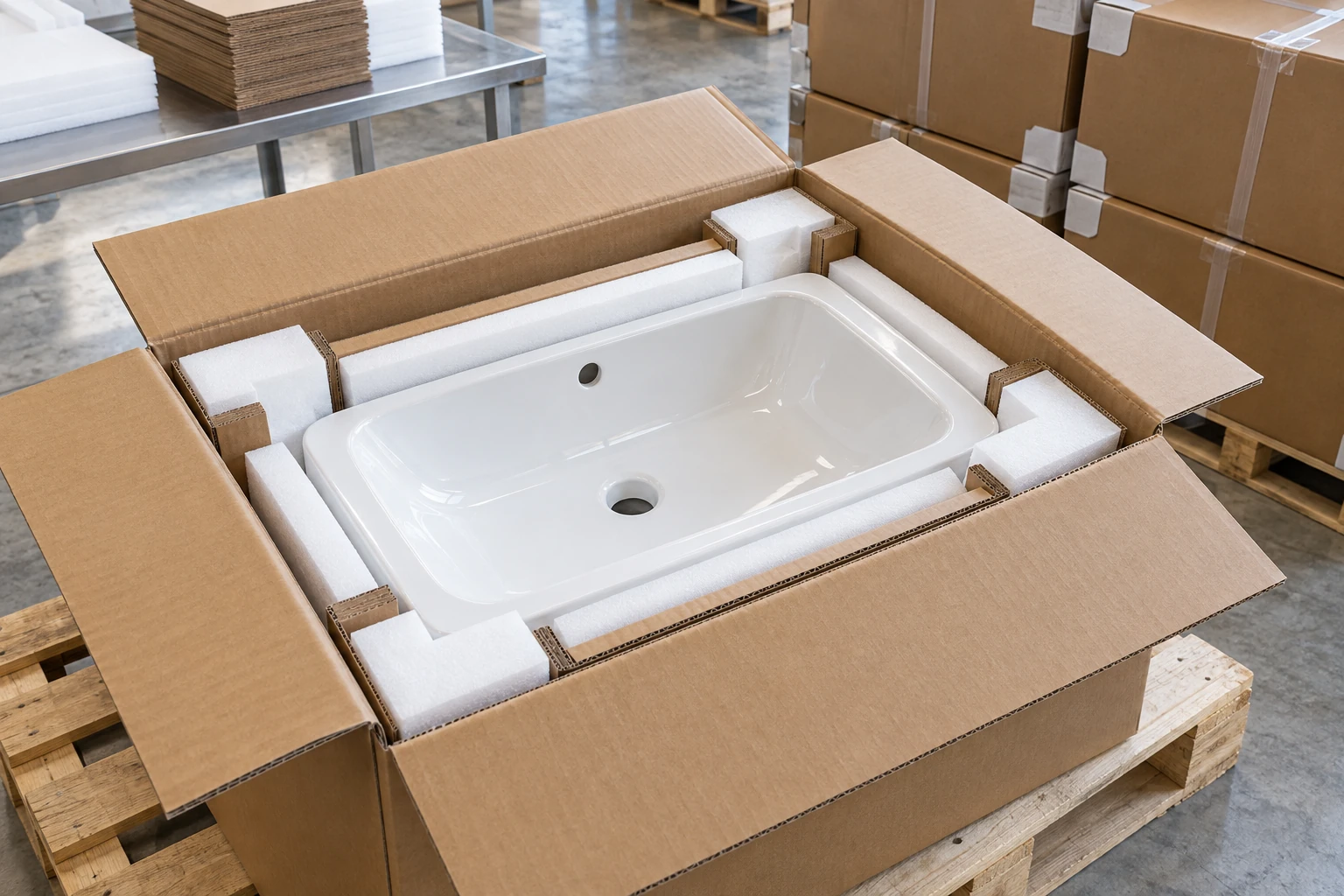
Ceramic sinks are hard and durable in use, but they do not respond well to concentrated impact during transport. A basin can leave the factory without visible defects and still arrive with a chipped rim because it shifted inside the carton, took repeated vibration or carried the weight of a poorly stacked load.
Good export packaging is a system. It combines the product shape, internal supports, carton, pallet or container loading and the number of handling stages along the route.
Map the shipment route before approving the pack
A full container moving from factory to importer warehouse is different from a consolidated shipment that passes through several depots. Each transfer adds forklift movement, manual handling and opportunities for cartons to be turned or stacked differently.
Tell the supplier whether the goods will move by full container, less-than-container load, mixed consolidation or onward courier delivery. The retail journey may continue after the ocean leg, so packaging that survives the port is not automatically ready for local distribution.
Internal movement is a major source of damage
If the basin can move inside the carton, every vibration allows it to gather momentum before meeting a support or wall. The outer box may remain intact while the rim receives repeated small impacts. Fitted supports should hold the product securely without transferring pressure to one fragile point.
Shake-testing a sample carton by hand can reveal obvious movement, although it is not a substitute for a formal test program. Open the pack after handling and look for compressed areas, abrasion, shifted supports and contact between ceramic surfaces.
Protect rims, corners and decorated surfaces
The vulnerable area depends on the basin form. A rectangular model may need attention at corners and long edges. A tall vessel basin can load its base or rim when the carton is dropped. Metallic and matte finishes may require surface separation to prevent rubbing even when the ceramic body remains undamaged.
Packaging materials should not leave marks, trap loose particles against visible glaze or allow accessories to move against the basin. If drains or fittings share the carton, they need their own contained position.
Match carton strength to weight and stacking
Carton specification should reflect product weight, size, stacking height and environmental conditions. A box that feels firm when empty may lose strength under sustained load or humidity. Large basins can also create broad unsupported panels that flex during handling.
Review the bottom closure, carrying points and whether the pack can be lifted without grabbing a weak flap. Clear product identity and orientation marks can support handling, but they do not replace robust construction.
Pallet and container loading complete the system
Cartons should sit securely on the pallet without excessive overhang. Stretch wrapping, straps and corner protection must stabilize the load without crushing the boxes. Within a container, voids and height differences can allow groups of cartons to shift during braking or sea movement.
A mixed-model load needs particular attention because carton sizes and weights differ. Heavier packs should not create unstable pressure on smaller ones. Photograph the loading pattern and retain it with the shipment record when repeatability matters.
Consider moisture and storage time
Ocean transport and warehouses can expose cartons to changing humidity. Moisture can soften corrugated board and reduce stacking performance. Containers should be dry and packaging stored away from wet floors. Any moisture-control approach should be appropriate for the route and discussed with the logistics team.
Long dwell times also matter. A pack that survives a short test may behave differently after weeks under compression.
Review the complete pack, not one component
Before bulk shipping, inspect a packed sample using the actual basin, supports, accessories and carton. Record the arrangement so production packing follows the same reference. The broader B2B ceramic basin order checklist helps connect this packing approval to model, finish and quantity controls.
After the first shipment arrives, collect damage data by model and location. A chip at the same corner across several cartons points to a different problem from random breakage caused by a collapsed pallet. Packaging improves fastest when claims are documented rather than described as “some damage.”
The goal is not the heaviest carton. It is a pack that controls the product through the real route at a practical cost.